Visit Us
Walk through history as we guide you to things to learn, places to discover, and events that help connect us to our rich heritage.
December 12th, 2025 |
By Sierra Pensyl
“Not Jerusalem, Lowly Bethlehem!”
Bethlehem has long been known as the “Christmas City,” but its ties to the holiday date all the way back to the first half of the 18th century when religious reformer Count Nicholas von Zinzendorf invited Moravian members to live on his property in Herrnhut, Germany to avoid persecution. This act of kindness revitalized the Moravians and spurred on their missionary work.
Moravian groups soon traveled to North America in hopes of spreading their Christianity. In 1741, after a failed attempt at settlement in Georgia, a group of Moravians purchased a 500-acre tract of land along the Lehigh River in Pennsylvania. The group thrived off Pennsylvania’s natural resources and open-mindedness, growing from fewer than 20 people to several hundred and becoming the epicenter of Moravian missionary activity over the following 10 years.
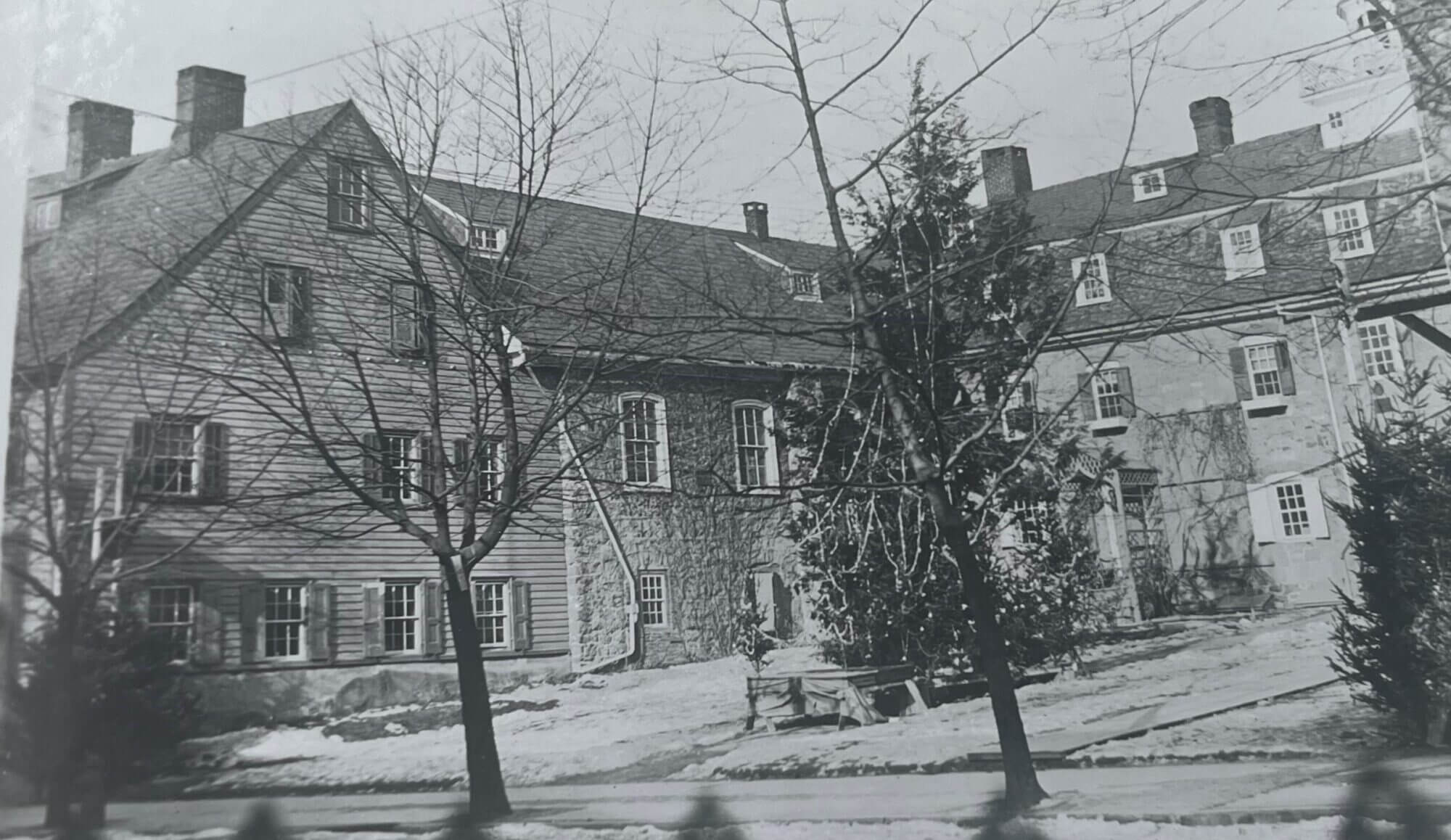
During a visit to the Moravian settlement in 1741, Count von Zinzendorf was so impressed with the community’s Christmas Eve vigil that he likened the settlement to Jesus’ birthplace in Bethlehem. The similarity between the Moravian community and the location where Christ was born in the Middle East prompted Zinzendorf to light a candle and lead the way to the First House, a combination of a log dwelling and stable. All the while, the group sang the words of an old German Epiphany hymn, “Not Jerusalem, Lowly Bethlehem!”
From this inspiration, the settlement’s name was established — Bethlehem.
Becoming “Christmas City, USA”
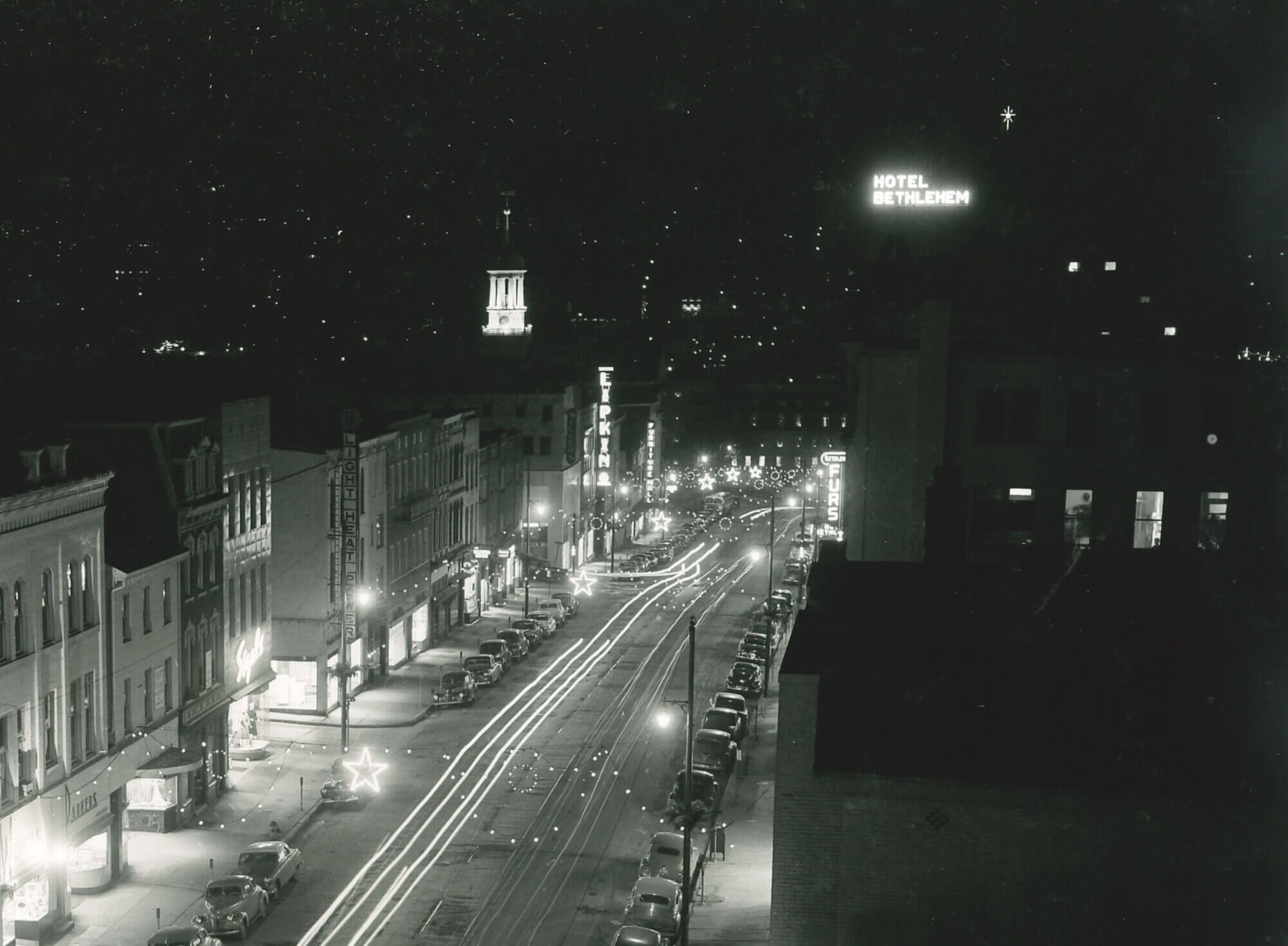
Bethlehem’s ties to Christmas were further solidified on Dec. 7, 1937, when Marion Grace, the head of the Bethlehem Chamber of Commerce’s Women’s Advisory Committee, flipped the switch on thousands of lights and the then 81-foot-tall “Star of Bethlehem” to mark Bethlehem’s adoption of the name “Christmas City, USA.”
The idea to brand Bethlehem as the Christmas City came from the need to develop tourism revenue streams during the Great Depression and the desire to unite North and South Bethlehem. Vernon Melhado, the president of the Chamber of Commerce, designed a plan to support retailers on both sides of the Lehigh River. During the city holiday lighting in December 1937, Melhado stated, “It is hoped that these decorations will encourage our businessmen.”
Residents were encouraged to participate in a home lighting contest. Elaborate light displays, nativity scenes and Christmas décor remained lit from dusk until 10 p.m. for visitors to view. The decorations attracted so many viewers that policemen were often needed to direct traffic.
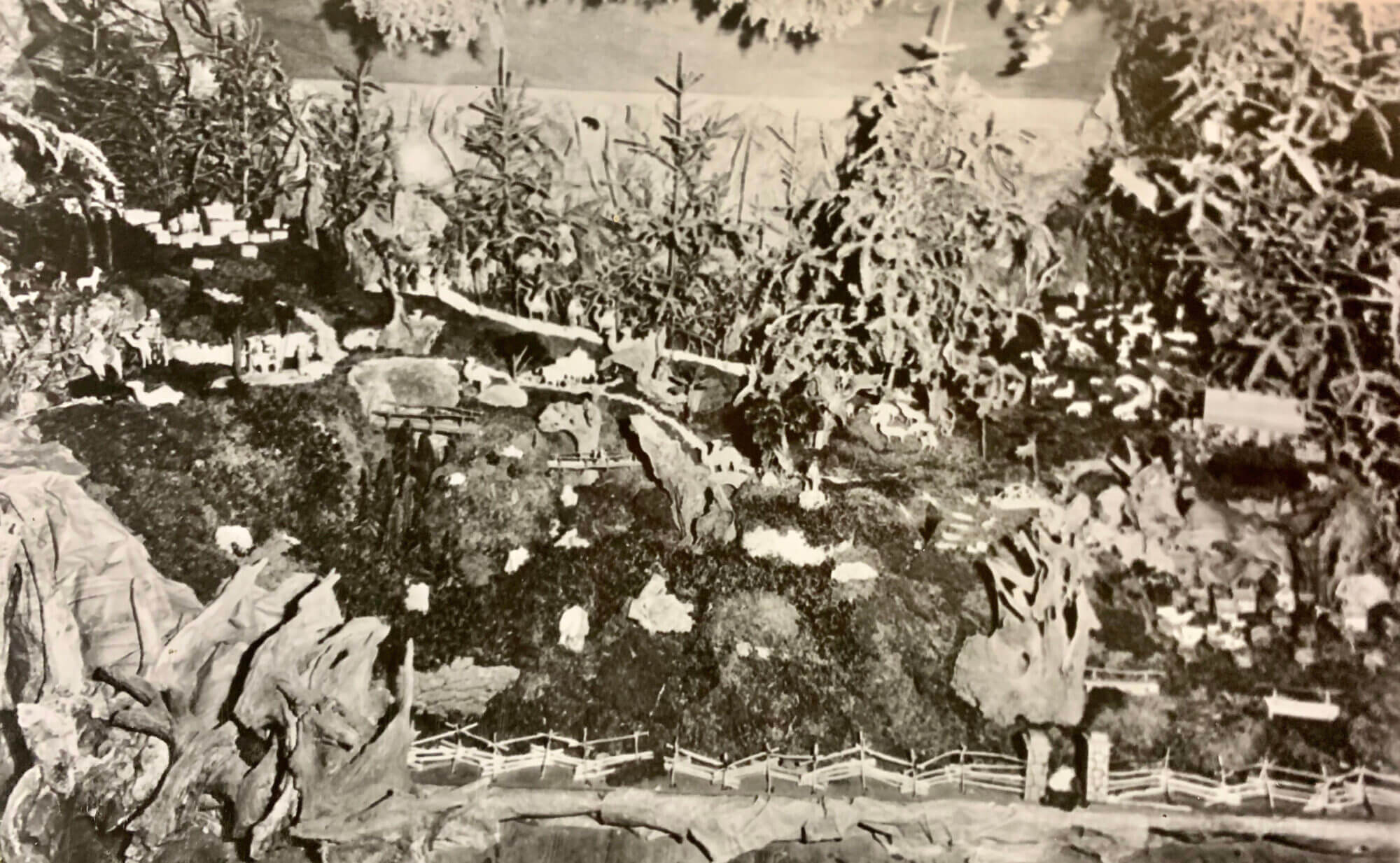
Visitors also flocked to the first community putz, placed in the office of the Bethlehem Chamber of Commerce. The idea for a community putz came from Edward Neisser, who received nearly 1,000 Christmas visitors for his own putz. In the first year the community putz was built in 1937, it attracted 14,000 visitors, with 3,000 people alone on Christmas week.
The community putz was moved in 1939 to the lobby of Hotel Bethlehem, where 200 volunteers managed the putz by reading the narration and working the lights. The attraction drew 30,000 visitors and continued to grow in popularity, prompting venue changes over the years until three community putzes were placed in local Moravian churches.
“Why not make Bethlehem, named at Christmas, the Christmas City for the entire country? Bethlehem did not create Christmas, but Christmas created Bethlehem.”
– Vernon Melhado, President of Bethlehem Chamber of Commerce, 1937
In 1939, Bethlehem Steel donated a new Star of Bethlehem consisting of 91 feet of galvanized steel lined with 280 bulbs visible from more than 20 miles away. The star is still seen on the side of South Mountain and is lit up every day from dusk to midnight, connecting present Bethlehem with the founding Moravian community.
In 1954, Bethlehem switched from using multicolored décor to clear white lamps. By the 1960s, the North side was decorated with white lights only, while places south of the Lehigh River were decorated with multi-colored lights. The white lights were said to represent the Moravian heritage of the first settlers, with the multicolored lights reflecting the ethnic diversity of the industrialized district.
Carrying on the Christmas Tradition
From the early Moravian community’s mission to care for and interact with outsiders stemmed the creation of the Bethlehem Moravian “Fremden Diener” or “Servant of Strangers.” This Moravian-run hospitality organization and service helped care for the needs of travelers during the early communal living period of Bethlehem’s Moravian settlement.
Today, Historic Bethlehem Museum & Sites shares the Christmas traditions of the original Moravian settlers and carries on that guiding tradition through a variety of tours, while the City of Bethlehem offers holiday events that highlight Moravian history and celebrate the city decked out in its Christmas City glory.
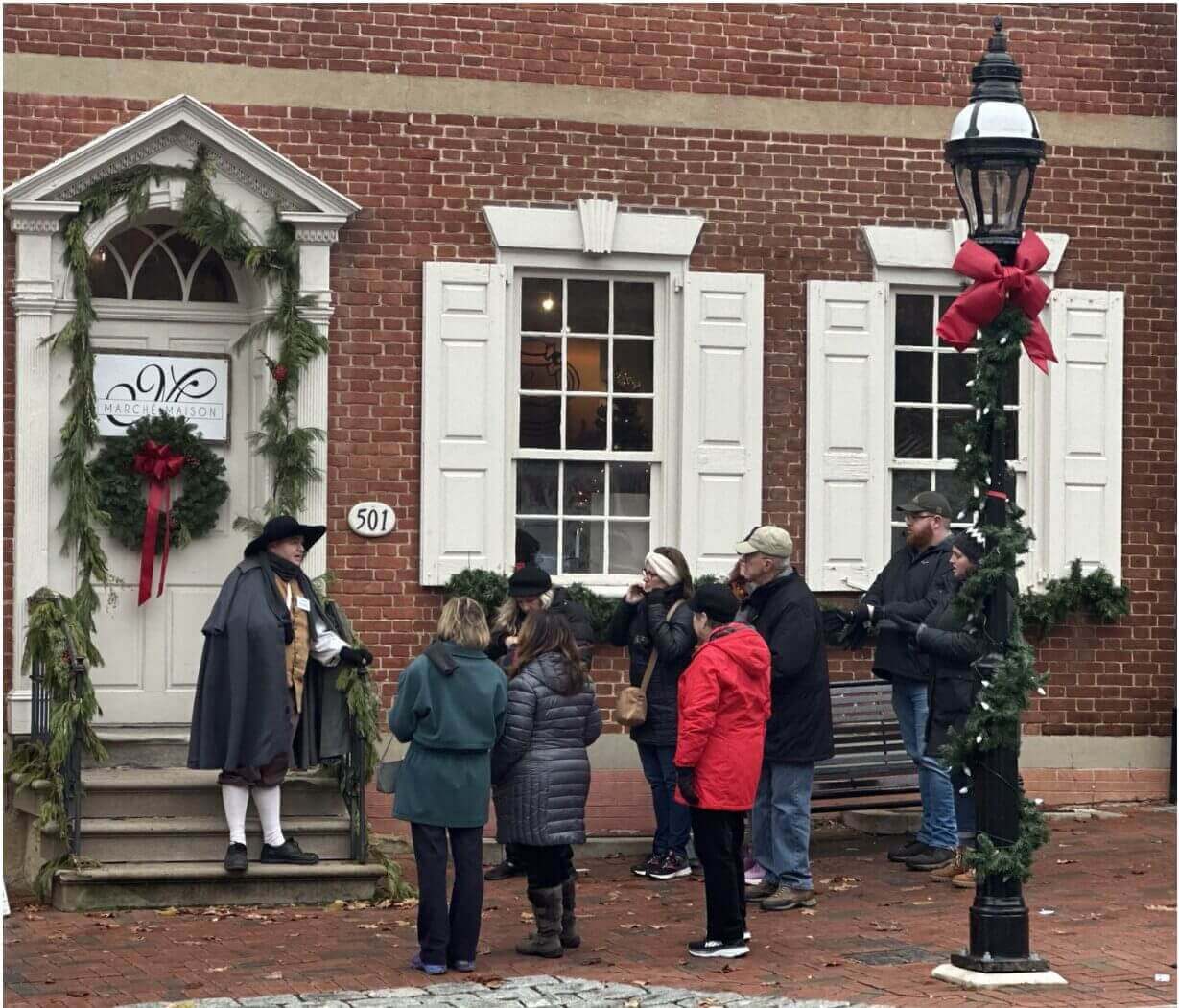
HBMS’s Christmas City Stroll guides visitors through downtown Bethlehem as they discover historic landmarks and the history of the Moravian settlement and Christmas traditions. The casual walk covers more than 280 years of Bethlehem’s history while covering the meaning of a candle in every window, beeswax candles, Central Moravian Church’s Community Putz, the iconic Star of Bethlehem atop South Mountain and the Moravian Star, an enduring symbol of the Moravian faith traditionally hung during the holiday season.
Celebrating Bethlehem’s uniqueness as the Christmas City, the Bethlehem by Night Motorcoach Tour provides the comfort of a warm ride through Bethlehem’s North and South sides as visitors discover the history of the city and its Christmas season traditions. The tour features a climb to the top of South Mountain where the Star of Bethlehem can be seen shining over the city.
The Community Putz is now displayed at the central Moravian Church, with the church’s congregants using moss, driftwood, rocks and figurines to create scenes retelling the story of Christ’s birth for nearly 5,000 visitors annually. Many of the carved figures used in the illuminated scenes are antiques of German origin.
While keeping old heritage in mind, new traditions have also emerged. A Live Advent Calendar takes place in Historic Downtown Bethlehem from Dec. 1-24. Each night, a visitor knocks on a door in the Sun Inn Courtyard and receives a gift from a local business. The crowd, at times reaching 300 people, then gets to enjoy surprise entertainment.
On the SouthSide of Bethlehem, one of the largest and most attended Christmas markets in the nation is held. Christkindlmarkt Bethlehem attracts more than 100,000 visitors each year looking to experience some of the charm of a European Christmas market. The event features dozens of artisan vendors and family activities that capture the Christmas spirit that led to Bethlehem becoming the beloved “Christmas City, USA.”





Translate the Historic Bethlehem Museums & Sites website into your language of choice!